
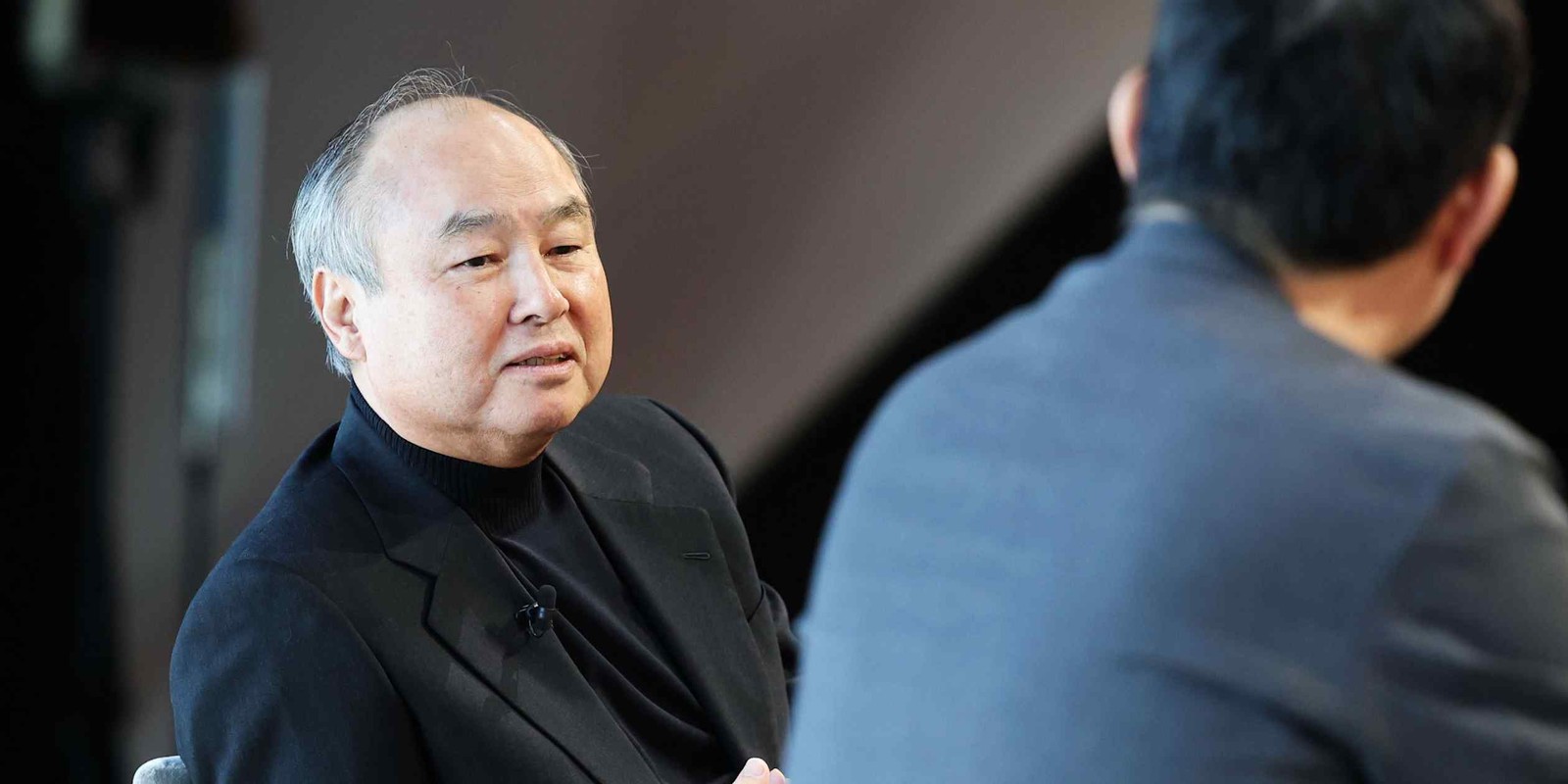
Masayoshi Son has a habit of describing his errors as arithmetic. On November 18, at an event in Tokyo, he applied the method to Anthropic.
The chairman of SoftBank Group said not investing in the artificial-intelligence company was a mistake, and that the two sides had at one point discussed an equity investment. He did not say how far the talks went, who ended them, or what stake was contemplated.
The timing of the remark is not accidental. Anthropic is due to begin trading on the Nasdaq on Thursday, and at the top of its indicated range the company would be valued at 1.4 trillion dollars. A stake bought two years ago at a fraction of that would have been the best trade in SoftBank’s portfolio.
SoftBank’s money went elsewhere. The group has committed tens of billions of dollars to OpenAI, in a series of investments that made it the largest outside shareholder in the company behind ChatGPT, and it holds a commanding position in Arm, the chip-design business it bought in 2016 and listed in 2023. Anthropic’s shareholder register, by contrast, carries Google, Amazon and a list of venture firms. SoftBank is not on it.
The omission is easier to understand in hindsight than it was at the time. Anthropic was founded in 2021 by former OpenAI researchers, and for its first two years it was one of several laboratories pursuing the same technical direction with less capital than the leaders. SoftBank’s style is to buy the category leader at size, and in 2023 and 2024 the leader was OpenAI.
Son’s public regrets have a pattern of their own. He has described missed investments before, notably the decision not to take a larger position in Nvidia when SoftBank’s Vision Fund held a stake that it sold in 2019 for a fraction of its later value. The remarks function as a form of accounting: they mark the opportunity cost out loud, which is a way of explaining a portfolio to investors who can do the arithmetic themselves.
They also carry an implicit message about the next phase. SoftBank has been assembling capital for AI investment at a scale that suggests it intends to buy its way into positions it does not yet hold, through direct stakes, project financing and joint ventures in data centers and power. An executive who says publicly that he missed a company is also saying that he will not miss the next one.
Whether SoftBank could still buy into Anthropic after a listing is a different question. Post-IPO, the price is set by the market, and a 1.4 trillion dollar valuation limits how much of the company a single investor can accumulate without triggering disclosure rules and a public fight over influence. Strategic investors who arrive after the offering usually get a small position and no board seat.
Influence is the part that matters for a company like SoftBank. Its model is not passive: it buys large stakes, takes board representation where it can, and pushes portfolio companies toward each other, sometimes into joint ventures and sometimes into mergers. Anthropic has spent its existence building governance that limits exactly that, from a public benefit corporation structure to a board designed to hold a line on safety commitments.
That mismatch may be the real reason no deal happened. A founder-led laboratory that has turned down acquisition interest at every stage is not an obvious partner for an investor whose method is to concentrate capital and take control. The discussions Son mentioned may have ended over price; they may also have ended over terms.
For SoftBank the financial consequence is narrower than the regret suggests. Its OpenAI position has appreciated substantially, and its Arm holding gives it exposure to the chip layer that every one of these companies depends on. A portfolio that holds two of the three most valuable positions in the industry is not obviously worse off for missing the third.
There is a competitive dimension as well. Japanese corporate groups have been slow to build positions in frontier AI, and the government has begun to fund domestic compute and model development as a matter of industrial policy. SoftBank’s role as the country’s most aggressive technology investor gives its choices weight beyond its own balance sheet, which is one reason Son’s remarks were reported as news rather than as color.
Analysts said the more useful signal is what the comment implies about valuations at the top of the market. When the chairman of the largest technology investor in Asia says publicly that a company was a mistake to skip, he is also saying that the price it now commands is one he would still pay. That is a statement about the market, made on the day before it prices the shares.
The shares begin trading on Thursday, and the market will set the figure that makes the regret measurable.



