The construction zone on Highway 101 near Burlingame was closed to traffic, marked with cones and barrel barriers, and staffed by workers who had every reason to expect that nothing would drive into it.
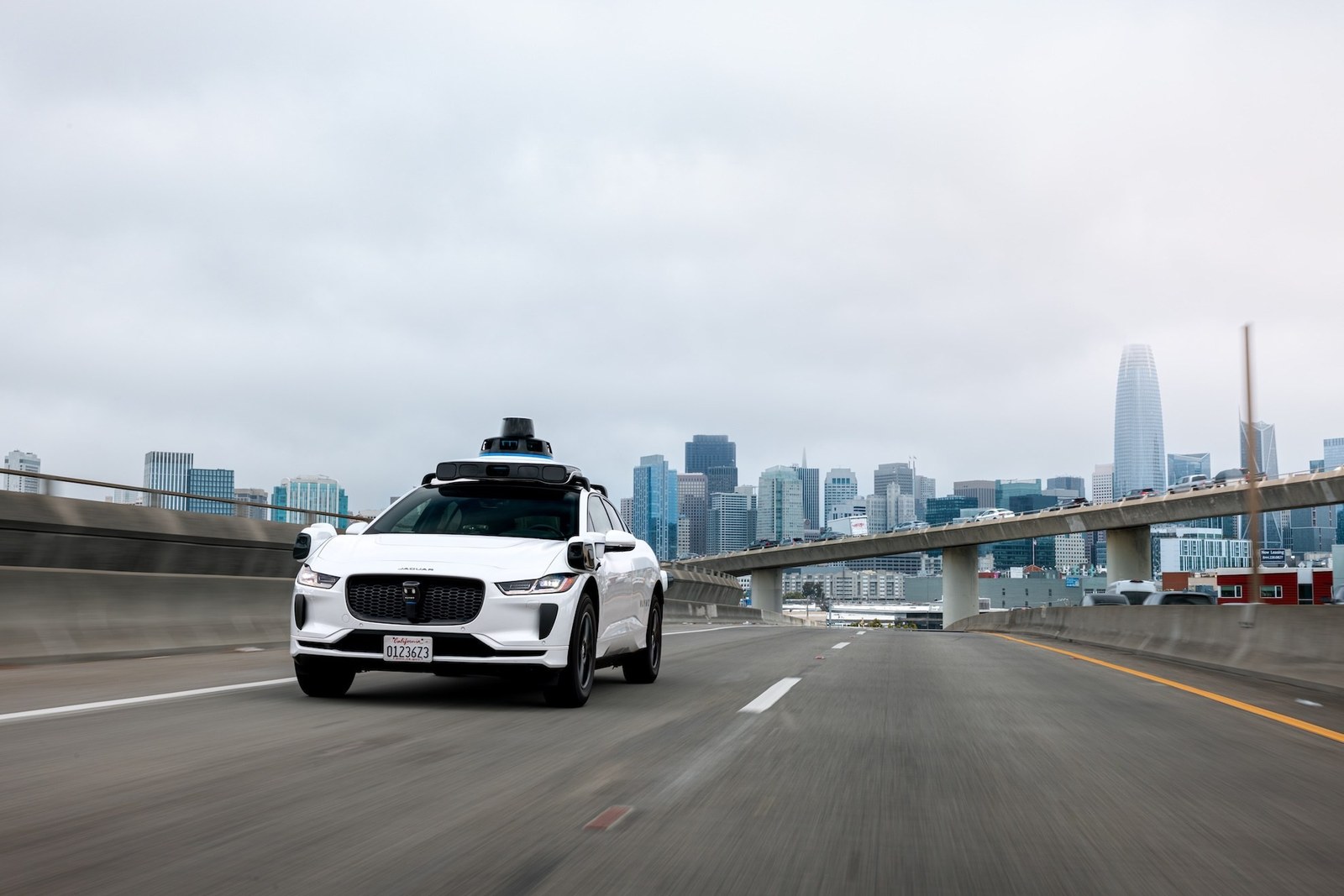
Three Waymo vehicles entered it anyway. A fourth, on Interstate 280 in San Francisco, failed to stop for a California Highway Patrol officer directing traffic. The state’s Department of Motor Vehicles reviewed the incidents, issued an operating restriction on Nov. 11, and made the order public on Nov. 17.
In it, the department concluded that Waymo’s driverless highway operations posed an imminent danger to public safety. Waymo responded by suspending commercial highway rides in all 15 cities where it operates.
The company said it will keep testing on highways with a human supervisor in the vehicle. Service on surface streets, which accounts for nearly all of its business, continues. Waymo says it completes more than 500,000 rides a week.
The distinction between a restriction and a suspension matters. California regulates autonomous vehicles through a permit system, and the DMV can suspend, revoke or attach conditions to a permit when it finds a vehicle is not operating safely. What the department issued was a restriction on highway operation, and what the company did was stop selling the service the restriction covered.
Highways were supposed to be the easier case. They are statistically the safest roads per mile driven, with divided lanes, no pedestrians and predictable geometry. For an automated system, the hard problems on a highway are the unusual ones: a lane closure that appears in a work zone, a flagger with a hand sign, a patrol officer standing in a lane and waving cars around an obstacle.
Those are exactly the situations where the rules are social rather than painted. A human driver reads a work zone by inference from cones, signage and the posture of the people in it. A sensor stack sees surfaces and objects and has to be told what they mean.
Waymo has argued for years that its system is conservative to a fault, which is a claim its safety record mostly supports. It has also expanded quickly: from a single metro area to 15 cities, with airport runs and freeway routes as the next tier of growth, because longer trips carry higher fares and serve customers who will not take a car that stays on arterial roads.
The freeway tier is where the money is, and it is also where the regulatory exposure is highest. A crash at 65 miles an hour is not a fender bender, and the political tolerance for one is much lower than for a low-speed collision in a city.
California has been here before. In 2023 the state suspended the permits of Cruise, then General Motors’ robotaxi unit, after an incident in San Francisco in which a pedestrian was dragged by one of its vehicles. Cruise never recovered its position, and its parent eventually absorbed the unit and stopped funding it. The DMV’s action this week is far narrower, but regulators read their own precedents.
What the department found is also unusually direct language for an agency that generally writes in the passive voice. An imminent danger finding is the standard that allows a regulator to act before a crash rather than after one, and it is the finding a company least wants on the record, because it frames the incidents as a pattern rather than a set of events.
Testing under supervision is the compromise the department left open, and it is a real one. A safety driver can take the wheel when the system misreads a work zone, which converts a public risk into an engineering exercise. It also means the miles keep accumulating, and the data that would justify a return to driverless highway operation keeps arriving.
For Waymo the operational question is how quickly it can show the department that the failure mode has been found and fixed. The technical question is harder: whether the system’s handling of work zones and manual traffic control is a software bug that can be patched, or a gap in how it interprets the intentions of people standing in a road.
Competitors will read the order closely. Tesla has been building toward a robotaxi service without a steering wheel, and other developers are testing in Texas and Arizona, where the regulatory posture is lighter. A finding in California that a leading operator cannot safely handle a closed lane is an argument every skeptical regulator will now have.
Waymo’s own account of the incidents has not been published in detail. The company has said it is cooperating with the department and reviewing the events, and it has not said how long the highway pause will last.
On the roads it still serves, the cars keep running. A rider in Phoenix or Los Angeles who hails a Waymo this week will get the same vehicle, on the same streets, at the same price. The difference is a document in Sacramento that says the company’s expansion has outrun its evidence.