
The bankers had a range of $70 to $78. They got $83, and they got more shares.
Anthropic PBC and seven co-founders priced the initial public offering on Nov. 19 at $83 a share, above the marketed range and against a larger share count than the company had been discussing. The deal moved 980 million shares, up from 825 million, of which the company sold 956.4 million and the founding team sold 23.6 million.
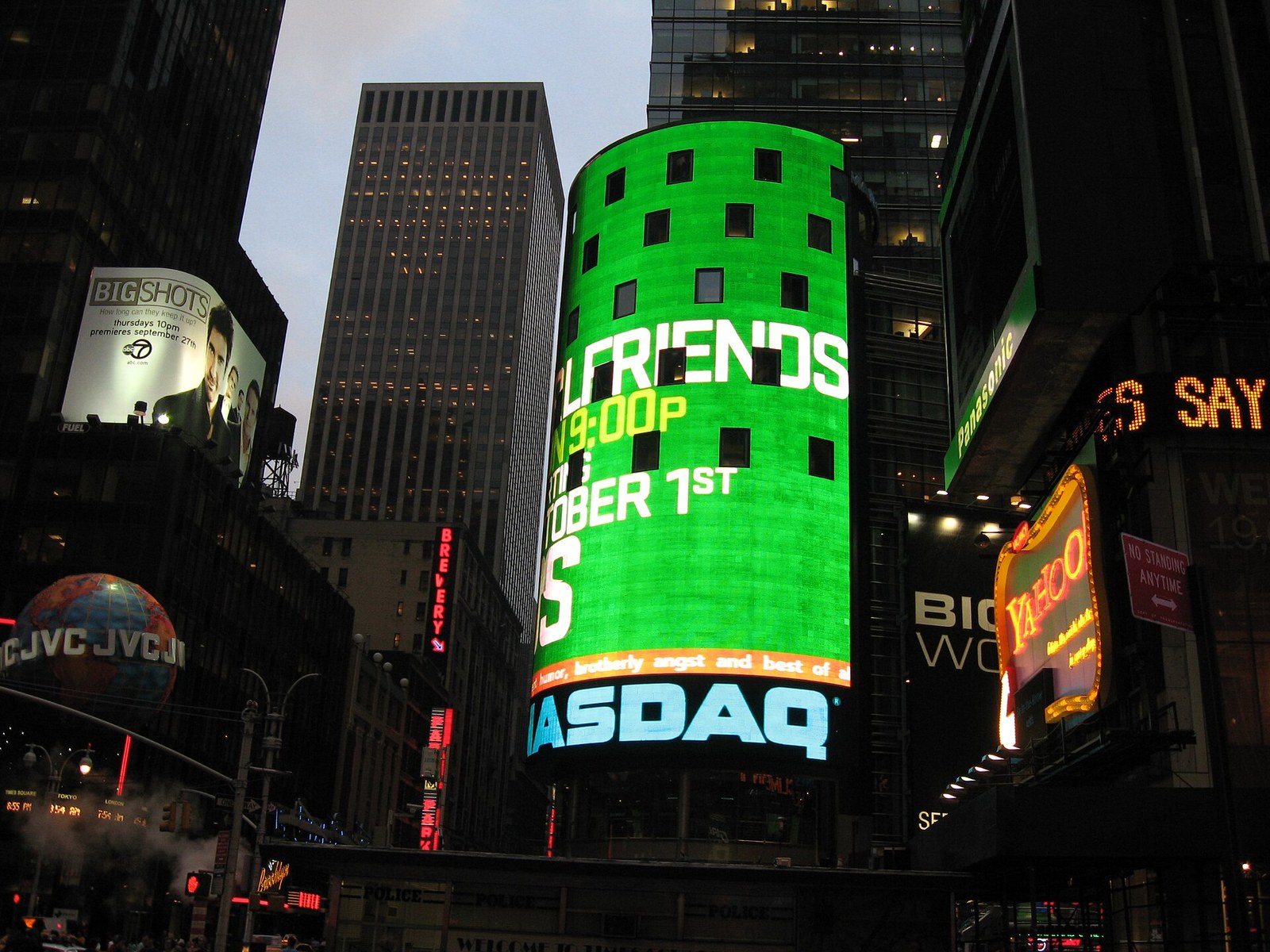
The arithmetic produces $81.3 billion raised, the largest sum any company has collected in a listing, and more than the record SpaceX set in June. At the offer price and counting every share that could convert, the company is valued at about $1.5 trillion. The stock began trading on Nasdaq the same day under the ticker ANT.
A concurrent private placement added $26 billion. Google, Nvidia, AMD, Broadcom, Micron, Microsoft and a subsidiary of Taiwan Semiconductor Manufacturing bought non-voting Class N shares at the offer price, bringing total fundraising to $107.3 billion.
That second tranche is the part worth reading twice. The buyers are the companies that supply Anthropic with chips, fabricate its silicon, rent it cloud capacity and compete with it in some markets. Taking stock at the IPO price, in a class with no vote, converts a set of commercial relationships into an ownership stake without giving any of them a say in how the company is run.
Non-voting shares also solve a problem the founders would have faced otherwise. A $26 billion placement of voting stock would have rearranged control of a company whose governance has been built around a long-term mission and a board that is meant to be insulated from short-term pressure. Class N keeps the money and drops the influence.
The financial disclosure in the filing explains the appetite. Revenue for the nine months through Sept. 30 was $33.2 billion, against $2.5 billion in the same period a year earlier. That is a 13-fold increase, a growth rate that turns the usual questions about software multiples into a different exercise.
At $1.5 trillion, the company trades at roughly 34 times annualized revenue from that nine-month figure. That is expensive by the standards of mature software and unremarkable by the standards of the fastest-growing infrastructure businesses, which is precisely the argument the deal’s bankers would have made in the days before pricing.
Raising the price and the size in the same decision is a signal about the order book. Companies do it when demand exceeds supply by enough that leaving money on the table looks like a mistake. It also raises the cost of a bad first day, because buyers who paid $83 have no cushion from a discount to the range.
The founding team’s decision to sell 23.6 million shares is small next to the company’s own sale, and it is normal at a listing of this size. Founders who have spent years on a salary take some liquidity when the market offers it. The size of the sale, at under 3% of the total, says they did not take much.
What the deal does for the sector is harder to measure than what it does for the company. A $1.5 trillion valuation for a model developer resets the comparison set for every laboratory that intends to list, and it gives private investors a public mark against which to argue about their own holdings. It also gives employees at rivals a number to quote when they negotiate.
The concentration of the placement among suppliers cuts the other way in a downturn. If the same seven companies are simultaneously customers, creditors and shareholders, a shock to one relationship travels through all three. Cross-holdings of this kind have a history of amplifying stress rather than absorbing it.
The mechanics of the week explain the outcome. A roadshow that begins with a range and ends with an oversubscribed book leaves the underwriters two levers, price and volume, and the company pulled both. Allocating 980 million shares rather than 825 million also widens the base of holders, which matters for a stock that will need index inclusion and daily liquidity.
For Anthropic the structure answers a question that has followed the company since its founding: how a laboratory that describes its work in terms of safety raises the capital to compete at the frontier without handing control to whoever writes the largest check. The answer, as of this week, is to take checks from seven companies at once, give none of them a vote, and let the public market supply the rest.
For the public market the immediate test is the first weeks of trading, when index funds begin buying and the float grows. Offerings priced above range in a hot market often open higher still, then drift as lock-up expirations approach and early holders decide what they own.
Anthropic has not said what it will do with the money. The filing describes the usual uses: compute, research, hiring, and general corporate purposes. In this market, general corporate purposes at a company like this one means buying accelerators.
The record will stand until someone larger lists. What the pricing says is that public investors were willing to pay above the range for a company that did not exist four years ago, at a multiple that assumes the revenue curve keeps its shape. That assumption is now the company’s problem, and it is being marked to market every day.



