
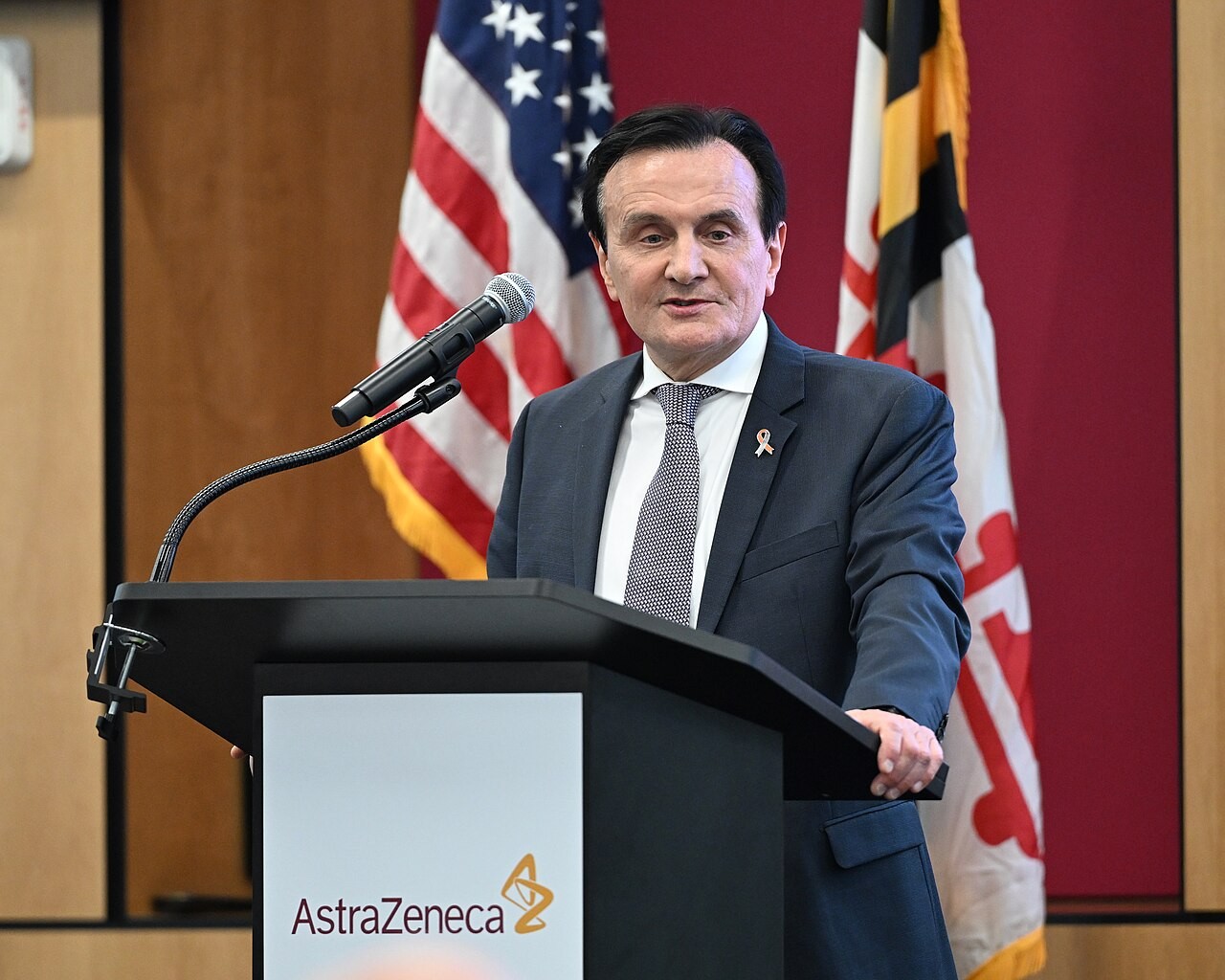
In May 2014, Pfizer made a formal approach that valued AstraZeneca at about £69 billion, and the answer from the smaller company’s boardroom was no. The man who said it had been chief executive for less than two years and had not yet shipped a single drug from his own pipeline.
That decision is the one Pascal Soriot has been judged on ever since, and the verdict delivered by the share price is unusually clear. Fourteen years into the job, the stock has risen roughly fourfold, ahead of the FTSE 100 over the same period, and the company reported revenue of $58.7 billion for 2025.
The reasoning behind the refusal was narrow, and he has repeated it in public ever since: bet only where the science is understood, and where the company can be first or second. Pfizer’s offer was a conglomerate argument, built on cost synergies and tax residence. His counter was that a research company’s value sits in its pipeline, and that a merger financed with cuts would have removed the people who make the pipeline.
He then spent the following decade proving the point in the least fashionable way available. AstraZeneca sold or spun off the mature products that funded the old company and put the proceeds into three therapy areas, with oncology first among them.
The oncology bet was the risky one. In 2014 AstraZeneca was a respiratory and cardiovascular business with a thin cancer portfolio, and the market’s view was that cancer was a game for companies with scale in it. The answer was to buy the scale rather than build it, starting with a partnership with Japan’s Daiichi Sankyo that gave the company a stake in a class of antibody drug conjugates now central to its growth.
The second leg came in 2021, when AstraZeneca paid $39 billion for Alexion, a rare disease specialist. That deal was criticised at the time for its price. It gave the company a franchise with small patient populations, high prices and long exclusivity, which is the closest thing the industry has to a stable revenue base.
The two engines are now visible in the numbers. In the second quarter of 2026, oncology sales grew 15% and rare disease sales grew 8%, against a group that is no longer growing on the strength of a covid vaccine.
The industry comparison is unkind to the alternative path. Pfizer, which made the 2014 approach, has spent the same decade buying scale in oncology and obesity and writing down assets it had bought at higher prices. The contrast is not that one company is better run. It is that a focused portfolio and a conglomerate portfolio have different failure modes, and the last decade punished the second one.
What the company got right was sequencing. It cut before it bought, which meant the acquisitions were funded from a smaller cost base rather than layered onto an existing one. It also kept the research organisation intact through the cuts, which is the part that rivals usually get wrong when they answer an activist.
The cost of the strategy has been time and concentration. AstraZeneca’s growth now rests on a handful of cancer drugs and a rare disease franchise, and a single trial failure in either would be felt immediately in the multiple. A conglomerate absorbs that kind of news. A focused company does not.
The second cost arrived in August 2026. AstraZeneca confirmed it had held merger talks with Bristol Myers Squibb, and the shares fell 9% in a single session as investors made their view known. The board stopped the discussions, and the episode closed a loop that had opened twelve years earlier with a different American bidder.
That reaction is worth reading carefully. Investors who had rewarded the 2014 refusal were not rejecting a deal on principle. They were pricing the risk that the company would spend the premium it had earned on scale it did not need, at a moment when its own pipeline was delivering.
His tenure has also changed what a British pharmaceutical company is expected to look like. When he refused Pfizer, the argument in London was about jobs in Cheshire and research sites in Cambridge. Fourteen years later the company is a global trial machine with manufacturing in the US, China and Europe, and the debate about national champions has moved on.
The open question is succession. A chief executive who has been right for fourteen years becomes a risk of his own, because the strategy is identified with one person and the board has to replace a judgement rather than a job description. AstraZeneca has not named a timeline.
For investors, the lesson is less about courage than about clarity. The 2014 decision was defensible because the company could state, in one sentence, what it was for. That sentence has survived four cycles of enthusiasm about mergers, and it is the reason a £69 billion cheque was the cheapest thing AstraZeneca ever declined.



