
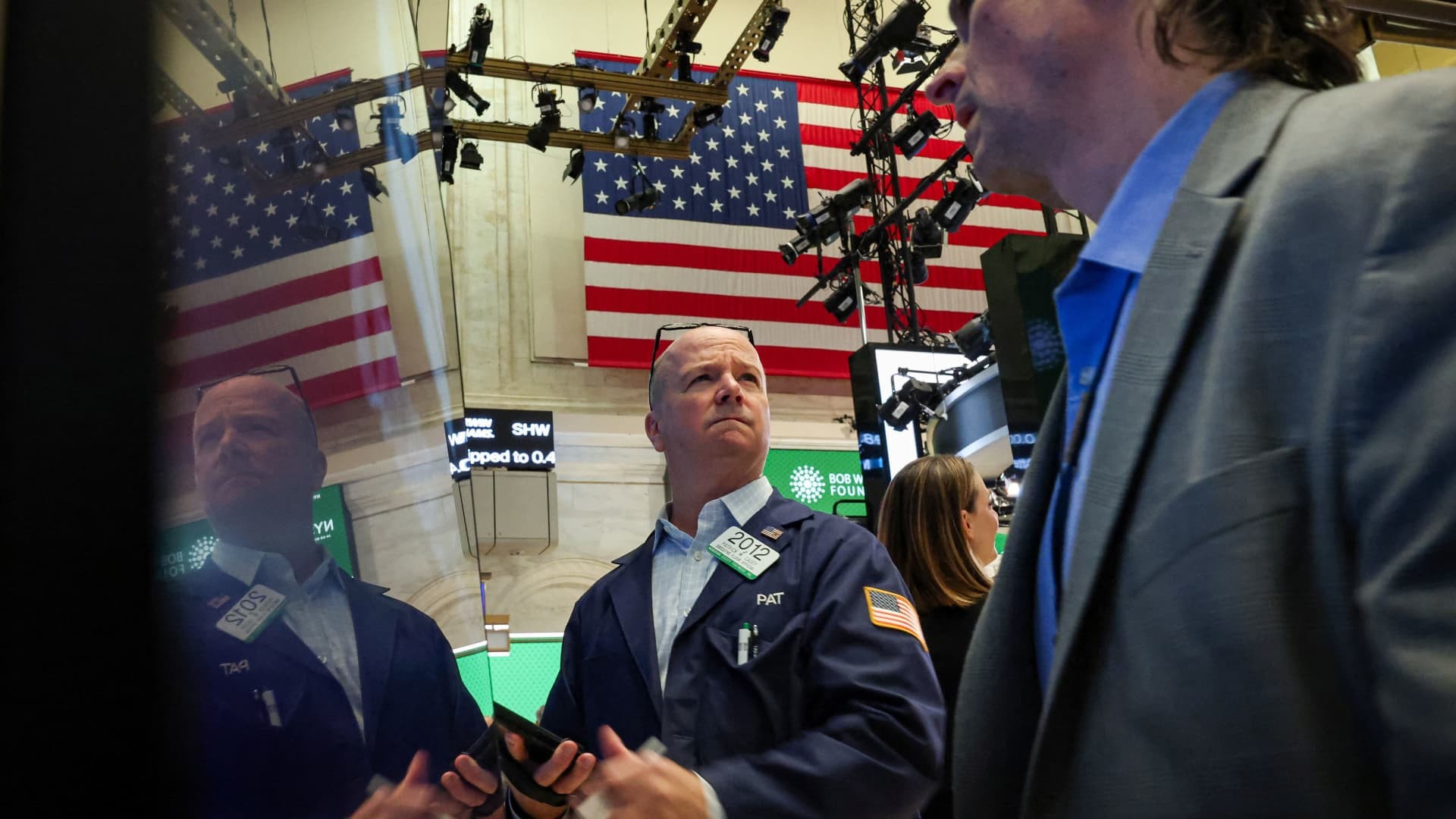
The setup looked close to ideal. Nvidia reported strong quarterly results, Anthropic’s initial public offering gave the artificial intelligence trade a fresh valuation marker, volatility indexes expired without incident, and a large options expiration was due to clear. Nasdaq futures rose 2% on the combination, then gave the whole gain back before noon. The S&P 500 closed below its 200-day moving average.
For anyone holding US equities, that failure is the story. A market that cannot rise on four pieces of good news at once is not short of reasons to go up. It is short of buyers, and the difference tells you who is still trying to get out.
Nomura strategist McElligott put it in terms his clients understand: the bullish case has been over-socialized. The argument for a year-end rally has been repeated so widely, in so many notes and television segments, that it is already reflected in how investors are positioned. Good news therefore meets supply rather than demand, because the people who wanted the exposure bought it two months ago.
The mechanics of the session reinforced that reading. When volatility indexes expire calmly, the dealers who had been hedging options positions unwind those hedges, and a source of steady index buying disappears with them. A large options expiration works the same way, releasing a pile of hedges that had been supporting the tape. What is left is the underlying flow, and the underlying flow was sellers.
Nomura’s own estimates put the potential mechanical bid from trend-following funds at $7.9 billion if the index gains 2% from its reference level, rising to $21.1 billion at a 4% gain. Those numbers describe a market with a large buyer waiting in the wings. They also describe a buyer that only shows up after prices have already moved, which is why the failure to hold the morning’s gain carried more weight than the buying that never arrived.
Goldman Sachs prime brokerage data, which tracks the positioning of the hedge funds it finances, points the same way. Net exposure across those funds, meaning long positions minus shorts as a share of capital, fell to 41.6%, the lowest in five years. Selling in technology shares ran at minus 4.4 standard deviations, the fastest pace in a decade.
Two conclusions follow from that pair of numbers. The first is that professional investors have already done a great deal of de-risking, which is normally the raw material for a bounce. The second is that the selling happened at a speed that suggests forced exits rather than considered decisions, and forced exits tend to leave prices below where the fundamentals alone would put them.
The bullish case is not weak. Nvidia’s results showed that demand for AI hardware has not cracked, and the companies supplying that demand are still guiding higher. Positioning among hedge funds is washed out. Trend followers and volatility-targeting funds have billions of dollars of buying queued up if prices stabilize. A market that has absorbed this much selling usually finds a floor once the sellers are done.
The bearish case rests on a simpler observation. Retail investors and 401(k) contributors have not capitulated, which means the most stubborn holders are still holding. Until they sell, the washout is incomplete, and rallies get used as exit liquidity by institutions that need to reduce risk before year-end.
That is the part of the argument worth taking seriously. The retail investor who keeps buying every payroll cycle is the marginal buyer of US equities, and as long as that flow continues, drawdowns stay shallow. When it stops, the market loses its most reliable bid at exactly the moment institutions are also selling.
The growth scare is where the two sides disagree most. Bears argue that a market which ignores strong earnings is pricing a slowdown in spending on AI infrastructure, the one engine that has carried index earnings for two years. Bulls answer that the same earnings show the spending is still happening, and that the equity market is simply working through a positioning problem rather than a profit problem.
There is a reasonable middle position, and it is the one the data supports. This looks like distribution, in the technical sense of shares moving from strong hands to weak ones, rather than the start of a bear market. Distribution phases are uncomfortable and they take time, but they do not require a recession to resolve.
Here is the test to run. Watch the S&P 500 over the next several sessions against its 200-day moving average, the line it just lost. If trend-following buying arrives as prices firm, and the index still cannot reclaim that level on above-average volume, then the sellers are larger than the mechanical buyers and the growth scare is the real story. If it climbs back above the line and holds for three sessions, the failure was an expiration-week artifact and the year-end bid is intact.



