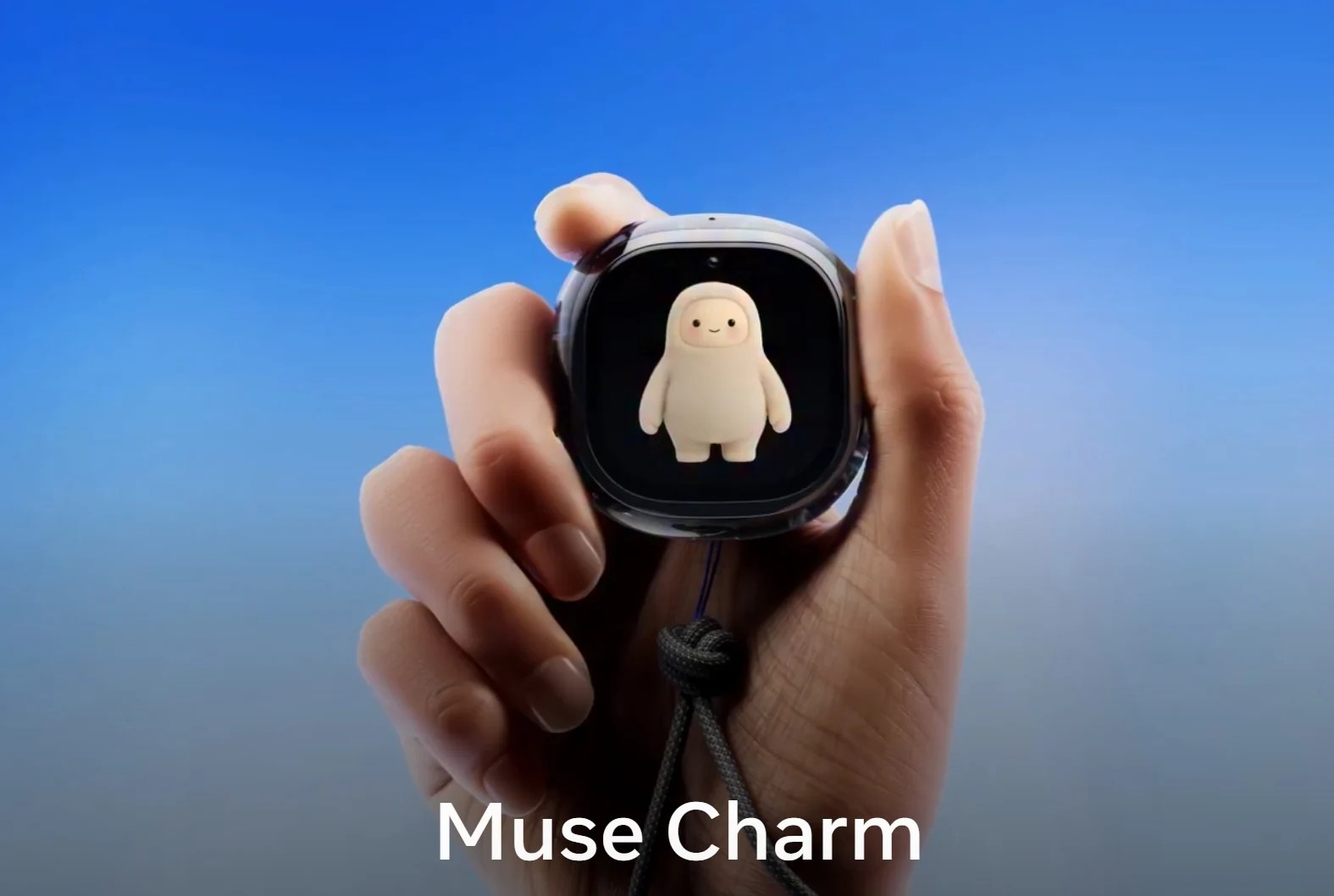
Meta Platforms plans to sell Muse Charm at $300 and to absorb part of that price for buyers, according to people familiar with the matter. The device will ship with up to 12 months of free Verizon 5G service, a bundle the company expects to shorten the wait between a question and an answer.
The pricing decision was taken inside Meta’s hardware organisation, which sits in Reality Labs and reports to Chief Technology Officer Andrew Bosworth. Meta has not disclosed who signed off, and a company spokesperson declined to discuss terms. What is clear is the shape of the bet: pay part of the hardware cost up front, then buy the network separately and give it away.
The motive is latency. Muse Charm is built around voice interaction and camera-based recognition, both of which send data to models that run in Meta’s data centers rather than on the device. A phone on Wi-Fi can answer in a second. A wearable on a weak cellular signal cannot, and an assistant that pauses before every reply stops feeling like an assistant.
Meta’s answer is to control the connection as well as the pocket computer. Verizon’s network is the carrier half of that plan, and the free year is the inducement that makes the plan visible to a buyer standing in a store.
The $300 tag also does work inside Meta’s product line. Ray-Ban Meta glasses, the company’s most successful hardware product, start at $299 in their base configuration. Pricing a screenless, phone-adjacent device at the same level tells retail partners where Muse Charm belongs on the shelf and tells buyers it is not a toy accessory.
It puts the device above most of the category’s experiments. Rabbit’s R1 sold for $199 and struggled to hold users after the novelty faded. Humane’s AI Pin cost $699 plus a monthly subscription and was discontinued after HP bought the company’s assets in early 2025. Neither failure was about price alone, but both showed how quickly a $300 to $700 gadget gets judged against a phone that already does the job.
Meta’s own view, in the words of spokesperson Tyler Yee, is that interest in AI devices has been strong and that more detail is coming shortly. That is as far as the company will go on the record. Asked about the $300 figure and other new information, Yee said Meta was pleased with the response to its AI hardware and would share more soon.
The comparison Meta would prefer is the glasses. Ray-Ban Meta found a mass audience because it looked like eyewear, cost about what decent eyewear costs, and did one new thing well enough to talk about. Muse Charm carries the same logic into a different form factor, with one addition: the network bill.
Carriers have run this play before. Verizon, AT&T and T-Mobile have all paid to put hardware in customers’ hands when the hardware needs a data plan to work, from connected cars to smartwatches. The carrier gets a subscriber with a reason to stay. The device maker gets a lower effective price and a connection it can tune.
For Verizon the trade is less obvious than it looks. A free year of service is revenue foregone on a customer who may leave when the year ends, and the traffic from a wearable that streams camera frames is not the traffic its network was planned around. Verizon has not commented publicly on the arrangement.
Where the money goes is the part Meta will not discuss. A subsidy of even $50 a unit on a device that analysts expect to sell in the low millions runs into the hundreds of millions, before marketing. Reality Labs has reported operating losses above $4 billion in recent quarters, and hardware has been the smaller half of that bill.
There is a second cost that does not appear in a launch budget. Bundling a carrier into the box ties the product to one network in one country, which complicates a global rollout and hands Verizon a negotiating position at every renewal. Meta has spent a decade avoiding exactly that kind of dependency with phones, where Apple and Google set the terms.
The alternative would have been to sell Muse Charm at cost and charge a subscription, the model that has worked for the glasses. That keeps the relationship with the customer and the margin on the service, but it asks buyers to sign up for a recurring fee before they have used the product once. Meta appears to have chosen a smaller upfront number instead.
None of this is confirmed beyond the outline. Pricing, bundling and launch timing can all move, and the people familiar with the plan cautioned that no final decision has been announced. Muse Charm’s success will be decided by whether the assistant is fast enough to justify carrying a second device, and by whether a free year of service turns into a paid second year.
That second year is where the accounting gets honest. If buyers keep the plan, Verizon has a customer and Meta has a distribution channel. If they cancel, Meta has paid a carrier to subsidise a device it could have discounted itself, and the $300 price will look less like a strategy than a discount with extra steps.