
In September 2021, two founders who had never taken a dollar of venture capital sold the email company they had built in Atlanta for about $12 billion. The buyer wanted Mailchimp’s mailing lists to work as a front door into small-business accounting, and it paid a price that assumed years of fast growth.
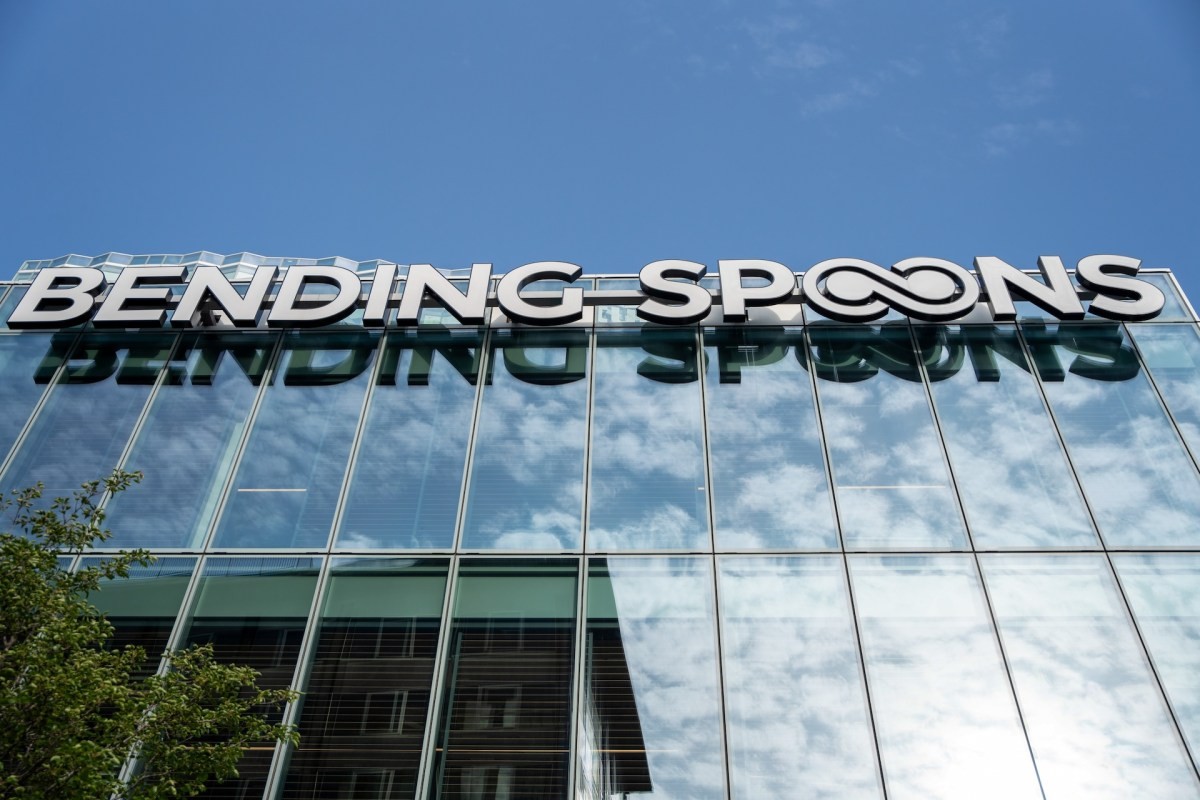
Five years later, the door is going for a discount. Bending Spoons said on Nov. 19 that it agreed to acquire Mailchimp from Intuit at an enterprise value of $3.68 billion, with the deal expected to close in early 2027.
The difference, about $8.3 billion, is one of the sharper marks yet of how the market for subscription software has repriced since the cheap-money years. Mailchimp was never a distressed asset. It was a profitable, deliberately unglamorous business that got bought at a price set for a different era.
Mailchimp started in 2001, when Ben Chestnut and Dan Kurzius ran a small web design shop and built an email tool for their own clients. It grew on monthly plans priced for restaurants, gyms and online sellers, stayed private, and took no outside money for nearly two decades. That history shaped the sale: there was no venture investor pushing for an exit, and no board with a fund clock running out.
The strategic case in 2021 rested on overlap. Millions of small businesses already used Mailchimp to send newsletters and QuickBooks to keep their books, and the theory was that one product could pull the other. Cross-selling payroll, payments and invoicing into a marketing list is harder than it looks. A merchant buys software one problem at a time, and bundle discounts that work for a 200-person firm rarely move a four-person bakery.
Then there is the structure of this deal, which is less clean than the headline. TechCrunch reported that the transaction is nominally all cash, but that the seller is rolling $368 million back into new Bending Spoons shares. Strip that out and the mix is roughly nine parts cash to one part stock. The rollover does two things: it keeps the seller financially exposed to a recovery it is handing to someone else, and it lets the buyer hold on to capital for the work that follows.
That work has a template. Bending Spoons, based in Milan, buys software that has stopped growing and runs it for cash. Its portfolio includes Evernote, Meetup, WeTransfer, Airtable and, pending approval, Vimeo. The playbook is consistent: cut headcount, raise prices, narrow the product line, and accept that some customers will leave. Evernote’s staff was cut sharply after the 2022 acquisition, and the product was repriced around heavier users.
For Mailchimp’s customers, the practical question is price and support. The company’s list pricing has already moved upward in recent years and its free tier has been trimmed. A buyer that has to service $3.68 billion of enterprise value has little room to be generous with small accounts that generate a few dollars a month.
The seller’s side of the ledger is plain. The company told Reuters the sale lets it concentrate resources on artificial-intelligence tools for small businesses and use the proceeds for share buybacks. Buybacks are a signal in themselves: with the stock under pressure through 2025, management is choosing to return capital rather than fund another turnaround.
A valuation argument sits inside the price. An asset bought at a rich multiple of revenue in 2021 is being sold for a fraction of that on the way out, and the write-down lands in a year when several acquisitions from that period are being marked down by their owners. The pattern is familiar from earlier cycles. Assets bought for cross-sell are the first to go when the cross-sell does not arrive.
For the market, the deal says more about buyers than about Mailchimp. Financial sponsors and roll-up operators are now the natural owners of sub-scale software with steady cash flow, while strategic buyers retreat to categories they can defend. That shift matters for pricing across the sector, because a sponsor’s model needs a return in five to seven years and cannot pay for synergies it will never realize.
Bending Spoons has capital to spend. It listed on Nasdaq in July, and Berkshire Hathaway put in $600 million at the listing and added $330 million in October, according to the company. A public currency and a large backer make it one of the few buyers able to absorb an asset of this size without a syndicate.
The risk sits between signing and closing. Early 2027 is a long time for a carve-out of a business woven into another company’s billing, data and support systems, and separation costs have a way of landing on the buyer. Antitrust review is unlikely to be the obstacle. Execution is.
Mailchimp’s founders sold a company they had run for twenty years and have now watched it change hands at a third of the price. The closing is scheduled for early 2027.



