
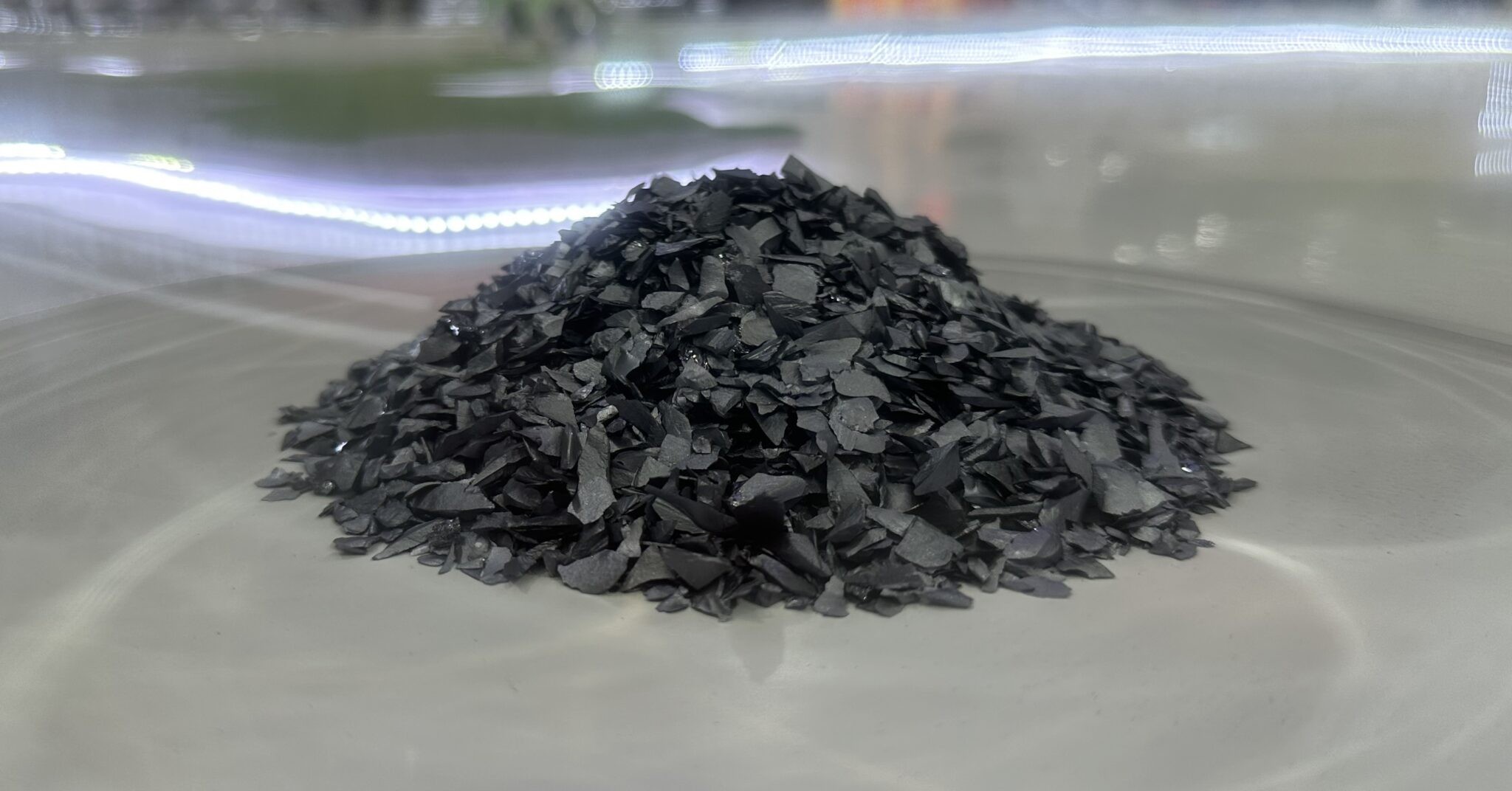
Tesla is asking a South Texas school district for property-tax relief on a $3.1 billion polysilicon refinery it intends to build, with construction running from 2027 to 2030 and production starting in 2030, according to an application made public on Nov. 18.
The filing, submitted to the Tuloso-Midway Independent School District, is the first detailed public accounting of the project. It asks for an abatement under the state’s JETI program, the 2023 replacement for the Chapter 313 incentives that Texas lawmakers let expire.
The plant would sit in Nueces County, near Corpus Christi, and would make ultra-high-purity polysilicon for monocrystalline ingots and N-type high-efficiency solar cells. That material is the feedstock for most of the world’s solar panels and an input for semiconductor wafers, and the grade Tesla describes sits at the top of the purity range.
The money splits cleanly. About $1.5 billion goes to engineering and construction, and $1.4 billion to equipment. That ratio is typical of chemical plants, where process equipment carries most of the cost and the schedule risk sits in commissioning.
Employment is modest for the capital involved. An analysis by EY included in the filing projects 515 workers by 2032, at an average annual wage of about $130,000. That is roughly $6 million of payroll against $3.1 billion of investment, a ratio that reflects how automated refining has become.
The filing is blunt about the incentive. Tesla states that it would not invest in Texas without the abatement, and that it is evaluating other locations. That language is standard, and it is the point of the program: the district competes against sites in other states rather than against nothing.
JETI works differently from the tax break it replaced. A school district approves a project, the state comptroller then determines whether it qualifies and how much taxable value is shielded, and the district receives a supplemental payment in place of some lost revenue.
For Tesla, the plant is a step upstream, and an unusual one. The company sells solar panels and a solar roof, runs a storage business that has grown faster than its car business, and buys most of its cells and modules from suppliers. Making the raw material would give it a domestic-content claim few competitors can match.
Supply is the reason that claim has value. China produces the large majority of the world’s polysilicon, and its capacity buildout pushed prices down by more than 80 percent from a 2022 peak, forcing higher-cost producers elsewhere to idle plants. Washington has answered with tariffs and with rules that bar Chinese-linked suppliers from claiming clean-energy credits, which raised the premium on non-Chinese material.
Hemlock Semiconductor, the Corning and Shin-Etsu joint venture in Michigan, is the largest American producer, and it has been expanding. A Tesla plant would add capacity at a scale that matters for the domestic solar chain, and it would give the company control over its own material costs if the timing works.
Timing is the risk. Polysilicon is one of the most cyclical materials in manufacturing, and a plant that starts in 2030 will be commissioned into whatever the market looks like then, not now. Producers that built during the last boom are still writing down assets.
Tesla’s capital discipline is the second risk. The company has slowed or shelved several projects in the past three years as car demand cooled, and a refinery is harder to pause than a factory shell. It has also told investors that spending would go toward autonomy and energy rather than heavy manufacturing.
Local politics will decide the rest. The district’s tax base is small relative to the project, and an abatement that shields most of a $3.1 billion facility for a decade is a visible trade: 515 jobs and construction work against revenue the district would otherwise collect.
School boards in Texas have rejected such deals before, and they have also approved them and then faced questions when the promised payroll arrived smaller than projected. County officials in the region have generally welcomed industrial projects. The port, refineries and chemical plants along the ship channel are the local economy.
Water and power are the practical constraints. Refining is energy-intensive and needs reliable industrial water, and the Corpus Christi area has been adding industrial load for years. Neither is a barrier at this site, and both are line items that can move a 2030 start date.
The comptroller’s ruling comes first, then permits, then the final investment decision the filing does not promise. Tesla has said it is looking at other states, and the application gives it a credible alternative to point at. The plant will not produce a gram of polysilicon before 2030, and by then the price of the material will have been through at least one more cycle.



