
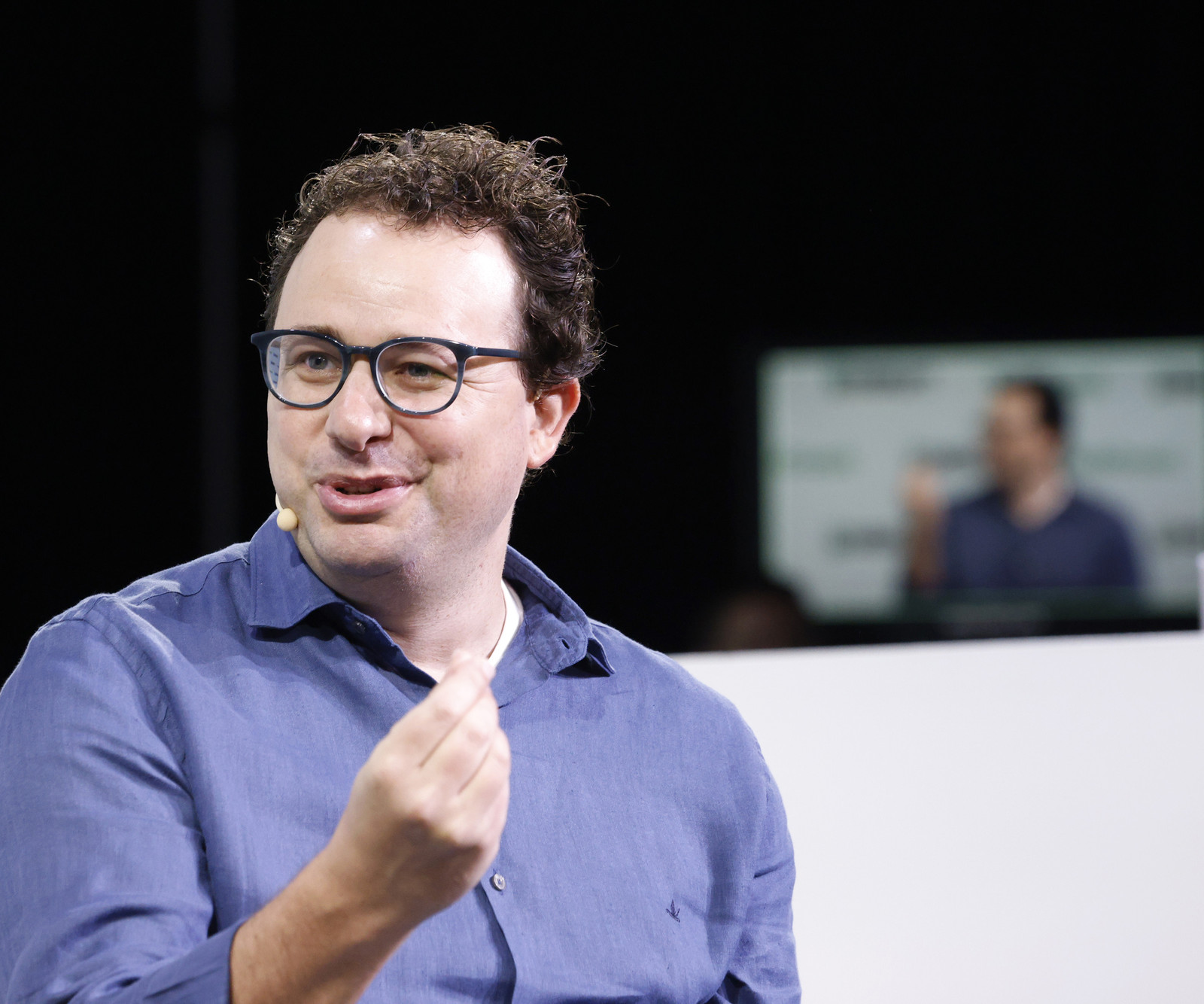
On Nov. 20, the day after Anthropic’s shares began trading on Nasdaq, its chief executive and its president each sold 3.378 million Class A shares to the underwriters at $83 apiece. The Form 4 filings, disclosed by the Securities and Exchange Commission on Nov. 23, put Dario Amodei’s proceeds at about $280.4 million and Daniela Amodei’s at the same figure, for a combined $560.8 million.
The price is the detail that matters. Eighty-three dollars was the offer price, not a market price. It was fixed before the shares traded and it applied to everyone who sold into the deal, including seven co-founders who each sold roughly 3.38 million shares.
The arithmetic is exact. 3.378 million shares at $83 comes to $280.374 million per person, which is where the $560.8 million total comes from. Anthropic opened at $111.50 on Nov. 19. At that print the same block would have been worth about $376.6 million each, so selling at the offer price left roughly $96 million per founder on the table, on paper, measured against the first trade of the day. That is how IPO secondary sales work. The selling shareholders commit before the book closes, and the opening print belongs to whoever buys after.
The structure matters for a second reason. These were existing shares sold by holders, not new shares issued by the company, so Anthropic received none of the proceeds. The $81.34 billion raised in the offering is a separate number and the largest in the history of the U.S. listing market. The founders’ $560.8 million is about seven-tenths of one percent of it.
What the filings show about the size of the position is more interesting than the sale. After the transaction, each of the two still directly holds more than 200 million shares. At the offer price, that is a stake worth close to $20 billion each. The shares they sold amount to about 1.4% of what they held, which is a rounding error against the exposure they kept.
That ratio is the argument against reading the sale as a verdict on the company. A founder who believes the stock is about to fall does not sell 1.4% and keep 98.6%. A founder who has been handed a public currency and a tax bill does exactly that. Diversification at the first legal moment is the standard behavior, and it is the reason lockup agreements exist.
The remaining shares are not free to sell. The filing indicates the balance unlocks in two tranches, the earliest of which comes after the first-quarter 2027 earnings report. That gives the market two dates to work with, and investors tend to price known supply before it arrives rather than after.
There is a second set of numbers in the same filings that says something about how the compensation was built. On Nov. 19 the company withheld 345,011 shares from Dario Amodei’s holding to cover income tax on restricted stock units that had vested. Withholding shares instead of cash is a common arrangement, and it means part of the founder’s economic interest was always going to be delivered to the tax authority rather than the market. The filings also disclose that a trust over which he exercises investment and voting control holds a further 35,932,660 Class A shares.
None of this is unusual for a listing of this size. What is unusual is the scale at which the ordinary steps happen. A 1.4% trim by a founder of a company worth more than a trillion dollars produces a nine-figure wire transfer, and that number gets read as a signal whether or not it was meant as one.
The gap between the offer price and the first trade is usually read as a measure of how badly the deal was mispriced, not of how much the sellers left on the table. On that reading, a 34% pop from $83 to $111.50 is a gift to the buyers who were allocated stock, paid for by the company and its selling holders in the form of underpricing.
For Anthropic the more consequential question is what the sale does to the shareholder base. The two founders still hold the bulk of their position, are still subject to lockups on the rest, and still run the company. The float that matters is the one that will be created in 2027, when the first tranche unlocks and the shares that were held back become eligible to trade.
Analysts who cover new listings watch founder sales for one thing: whether the insider is selling into strength or into a story. Here the sale happened before there was a market price to sell into, which removes most of the information that a normal insider sale carries. The price was fixed, the size was known in advance, and the sale happened on the first trading day after the listing.
What remains unresolved is what the $83 offer price becomes. It is now a reference point that every investor who bought in the offering will measure the stock against, and it is the number at which two founders chose to convert a small slice of their ownership into cash. If the shares trade above it into the lockup expiries, the sale will look like ordinary housekeeping. If they trade below it, the same filings will be read differently, and the two tranches in 2027 will be watched to see whether the founders sell again at a lower price or hold.
The filing records a transaction, not a motive, and founders are not obliged to give one. The number it records, $560.8 million at $83 a share, is precise to the dollar, and precision is the only thing about it that is not open to interpretation.



