
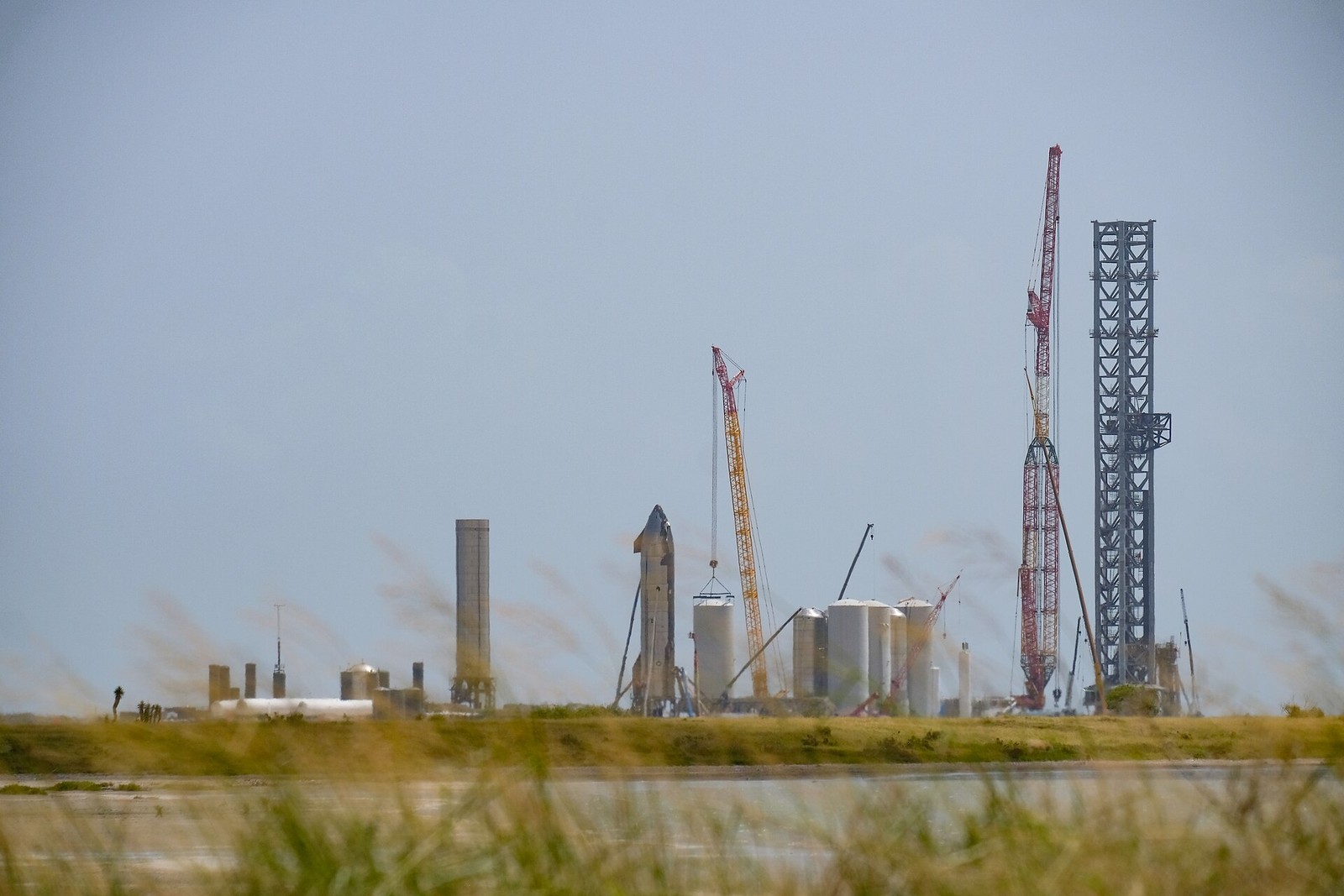
SpaceX and Tesla each set up a special committee of directors on Nov. 23 to frame talks on an all-stock merger, according to the Financial Times, which cited people familiar with the matter. Five directors were named to the two groups. Tesla’s three are Denholm, Wilson-Thompson and Hartung; SpaceX named two of its own.
The committees have hired advisers. Morgan Stanley and Goldman Sachs are working for SpaceX, and Evercore is working for Tesla, the report said. The work in front of them is specific: build financial models for the two businesses, agree on an exchange ratio, and bring a proposal to two boards and then to two sets of shareholders.
The number that has been attached to the talks is about $3.5 trillion. That figure is a market estimate of what a combined company would be worth, not a price anyone has agreed to pay. In an all-stock deal no cash changes hands at the top level. What gets negotiated is how many shares of the listed company each holder of the private one receives, and that ratio is where all of the value is decided.
That is why the composition of the committees matters more than the headline. A special committee exists to negotiate for the shareholders who are not in the room, and to be able to say no. When the person who controls both sides of a transaction is the same person, independent directors are the only mechanism that gives the process any distance at all.
Elon Musk said earlier this month that the two companies could merge. He runs both. Tesla is listed and has a public shareholder base with quarterly reporting obligations. SpaceX is private, with investors who bought in at valuations set in private rounds and employees who hold equity that has never traded.
Merging them would resolve several problems at once and create others. It would give SpaceX’s shareholders a liquid currency and a public mark. It would put a rocket and satellite business inside a company that sells cars, batteries and energy storage and that now presents robots and autonomous driving as its future.
The structural question is which entity survives. A merger of a public company and a private one usually ends with the public company issuing shares and the private one’s holders becoming shareholders of the listed entity. Tesla’s shareholders would be diluted by whatever ratio is agreed, and the size of that dilution is the whole negotiation.
The adviser lineup says something about how the two sides see the balance of the work. Morgan Stanley and Goldman Sachs on the SpaceX side, Evercore on Tesla’s, is a configuration that gives each committee its own banker and its own model. Two sets of models, one ratio.
People familiar with the talks described them as early. That word does the heavy lifting in this story. Early talks fail routinely, and the failure mode here is not a disagreement about strategy. It is a disagreement about price, expressed as a fraction.
There is also the question of what the combined company would be. Tesla’s value rests on a vehicle business and on the autonomy and robotics programs it says will follow. SpaceX’s rests on launch contracts, satellite broadband and a government book. Adding them together produces a very large number with very little comparability to any other company, which makes the exchange ratio harder to justify and easier to argue about.
Governance is the second unresolved item. A combined entity would concentrate control in a single person to a degree that few large listed companies match, and a merger would put that question to a shareholder vote rather than a public debate.
The approvals required are ordinary and substantial. Both boards have to agree, and both sets of shareholders have to approve. SpaceX’s shareholder base is smaller and more concentrated, which makes its vote easier to manage and its dissent harder to ignore. Tesla’s is larger and more dispersed.
What the market has priced so far is the estimate, not the deal. A $3.5 trillion figure attached to a transaction that has not been agreed is a way of saying the two companies are worth more together than apart, which is the argument every merger makes and few prove.
For Tesla’s investors the practical question is what they are being asked to own. A combined company would be less a carmaker and more a conglomerate with a launch business, a broadband business, a vehicle business and an artificial intelligence program, and conglomerates trade at a discount to the sum of their parts more often than at a premium.
The next datapoint will be a filing, not a statement. An exchange ratio is the first thing that will surface if the talks progress, and it will surface as a number attached to a recommendation from two boards.
Until then, the two boards have done the minimum that a transaction of this kind requires. They have created a structure in which the question can be asked, and they have hired the people who will ask it. The answer is a fraction, and the fraction is unknown.



