
The number the Texas Comptroller’s office certified on Nov. 25 is $3.54 million, a tax abatement for a wafer fab in Brazos County. The number the application rests on is $22.6 billion, the investment the company says the site represents. One is about a sixth of one percent of the other, and the gap is where the argument over American chip manufacturing actually lives.
The certification is a paperwork step, and it is also a gate. Texas does not hand property tax relief to a manufacturer on the strength of a press release; a company files, the state checks the job and wage and investment claims, and the local taxing units decide whether to go along. Brazos County has not finished that last part. The site is still waiting on local approval.
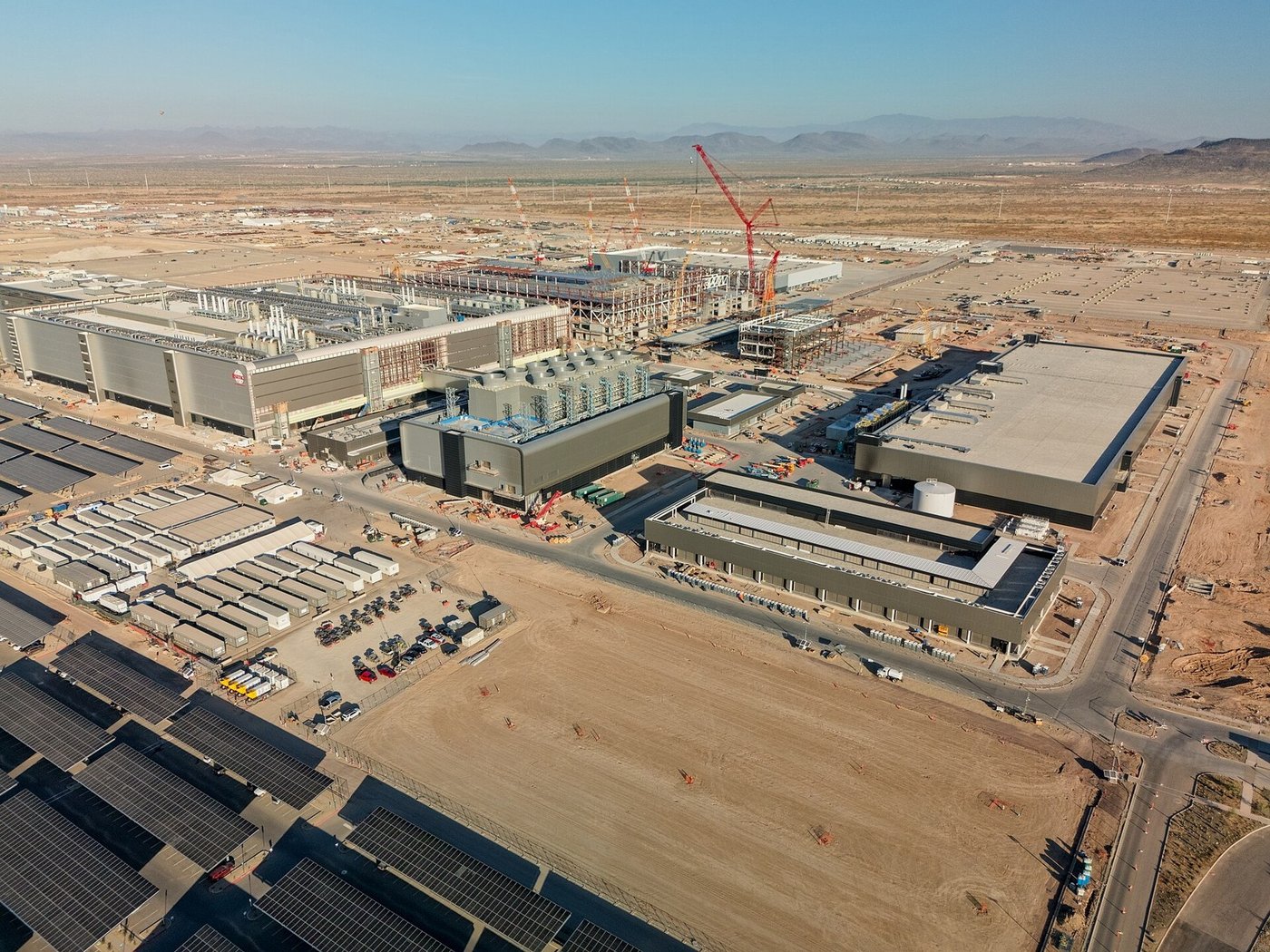
For the Taiwan Semiconductor Manufacturing Co., the filing is the second front in a buildout that began in the Trump administration’s first term and has been re-announced, expanded and re-costed in every administration since. The Arizona site outside Phoenix, known as Fab 21, is the one with walls and tools and wafers; it has been the company’s public answer to a decade of American complaints about where leading-edge logic is made. The Texas filing suggests a second geography, priced separately and negotiated separately.
What a state buys with an abatement of that size is not revenue. It is a claim on a supply chain: construction payroll, the vendor park that follows a fab, the property tax base that arrives after the ten-year window closes, and the political credit for landing a name that voters outside the industry recognize. Texas has run this play for data centers, for battery plants, for liquefied natural gas, and for Samsung’s fab in Taylor, an hour’s drive from Brazos County and a direct competitor for the same substrate of skilled labor.
The mechanical part has changed recently. Texas ran industrial abatements through Chapter 313 of its tax code, which let school districts waive a portion of the maintenance-and-operations levy in exchange for jobs and investment, and which the Legislature let expire at the end of 2022 after a decade of complaints about cost and about wind farms qualifying alongside factories. Its successor, the Jobs, Energy, Technology and Innovation Act, narrowed the categories eligible and moved the review to the comptroller. A $3.54 million certification is the shape that program takes when a project is large and the local tax base is not.
The federal layer sits on top. The 2022 chips law created a 25% investment tax credit for advanced semiconductor facilities, and the Commerce Department’s grant program signed its largest awards to exactly this kind of project. Arizona’s fabs drew both. A Texas site would be eligible for the credit whether or not the state relief comes through, which is why the local negotiation is about timing and goodwill as much as money.
The company’s own arithmetic has been under strain. Building a leading-edge fab in the United States costs materially more than building the same capacity in Taiwan, by the company’s own public accounting, and the first Arizona fab ran behind its original schedule as construction labor, tool installation and the qualification of processes all took longer than the Taiwanese playbook assumed. A second site in a second state inherits every one of those problems and adds a new permitting queue.
There is also the matter of what a fab needs that an abatement does not supply. Brazos County sits over the Carrizo-Wilcox aquifer, in a stretch of central Texas that has spent the last several years arguing about how much water can be pulled from it, and a wafer fab is a large and picky consumer of ultrapure water. Electricity is the other constraint; the state’s grid operator has been adding capacity and interconnection queue time at roughly the same rate.
None of that is on the comptroller’s form. The certification is a check on claims, not a judgment on whether the site should exist.
A fab in Brazos County would also land in a congressional district and a state legislative map that have been reliable votes for subsidies of this kind, and near a university system that produces the process engineers the industry says it cannot hire fast enough. That is the political economy of the thing, and it is why the dollar figure is small and the signal is not.
Meanwhile the Arizona work is moving toward a ceremony. The company is preparing to mark the start of production at the site, an event that has been assembled and rescheduled more than once as tool move-in and yield learning stretched out. A celebration is a scheduling artifact, but it is also the moment a subsidy stops being a promise and starts being a factory.
Two lines, then: a $3.54 million abatement certified in Austin, and a $22.6 billion project waiting on a county. The first is settled. The second has a schedule, which in this industry is a thing that gets rewritten.



