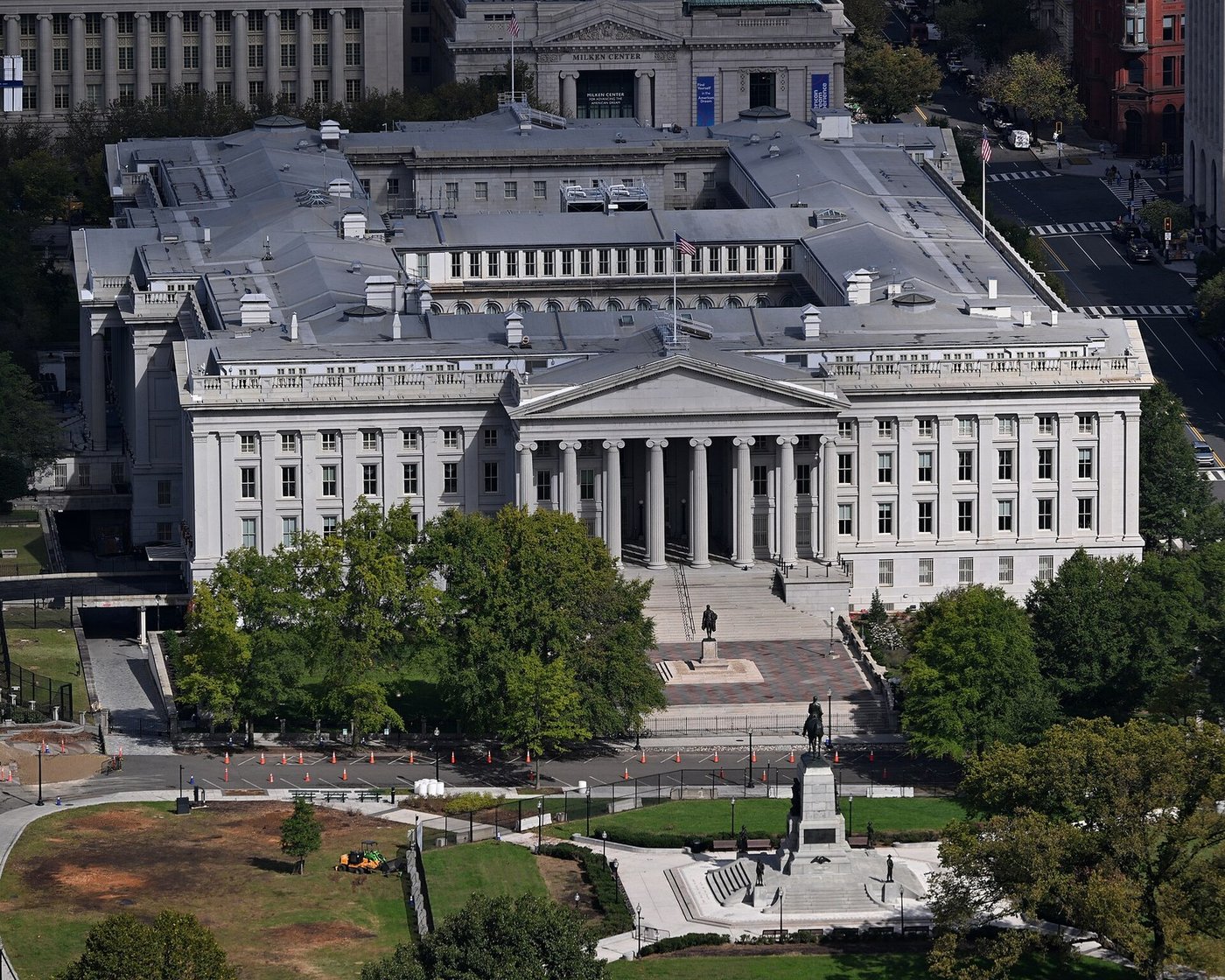
The unit of the US Treasury that reads the financial system’s suspicious activity reports has told the banks it supervises that they may file late, because it cannot vouch for its own systems.
FinCEN said on November 24 that it was investigating a cybersecurity incident, confirmed that a limited set of systems had been accessed without authorisation, and took some services offline as a precaution. The same day it issued waiver FIN-2026-R002, moving Bank Secrecy Act and beneficial ownership filings due between November 18 and December 29 to December 30.
The deadline relief is the disclosure. An agency that expects to be back within days does not extend six weeks of obligations at once.
What FinCEN holds explains the sensitivity. Banks file suspicious activity reports when they see transactions that look like laundering, sanctions evasion or fraud. They file currency transaction reports above thresholds.
Companies file beneficial ownership information naming the humans behind a corporate shell. The agency is a clearing house, not a police force: the reports are read by criminal investigators, sanctions officials and tax agents, and their value comes from accumulation.
A filing deadline is a legal obligation with a penalty attached, which is why it cannot simply be suspended by an email. A waiver is the only lawful instrument that lets an institution miss a date without becoming a defendant. The six-week window is therefore a legal construction built around an operational failure, and it will expire whether or not the failure is fixed.
The word “limited” is doing a great deal of work in that disclosure, and nobody outside the building can check it. There is no published inventory of the systems involved, no independent audit, and no statutory requirement to describe the perimeter. Banks are being asked to accept an adjective.
That matters because the perimeter is what determines the second-order damage. If the intrusion touched the submission pipeline, filings may have been exposed in transit. If it touched the case management system, informants and subjects of investigations may be identifiable.
If it touched the registry, the addresses and passport details of small business owners are in play. Each of those is a different incident with a different victim.
The reporting chain has already broken in a measurable way. Compliance teams that were holding filings for year-end now hold them longer, backlog builds, and the gap between a suspicious transaction and the report that flags it widens. Six weeks is generous for a bank that submits electronically through an unaffected route and short for one that has to re-certify its connection.
The timing is awkward in a specific way. Beneficial ownership filings cluster at year-end, when entities renew registrations and accountants clear their queues, and the deadline that has now moved was the one that forced that work. A waiver issued five days into the affected window tells filers to stop, wait, and start again on December 30, which is a queue, not a plan.
The unreported window is the part with consequences nobody will ever quantify. Investigators work backwards from reports to patterns, and a six-week hole in the record is a six-week hole in the evidence, not merely in the paperwork.
There is an asymmetry that the episode makes visible. Banks must notify FinCEN within a set period when they are breached, in detail, with root cause and remediation. FinCEN, breached itself, has disclosed a category, an adjective and a new deadline. The regulator’s obligations of candour run to Congress through classified briefings; the public gets a press line.
Financial intelligence is also infrastructure for statecraft. The same reports that catch a fraud ring catch a procurement network evading export controls, and the sanctions machine that the Treasury runs depends on a private sector that files on time and in volume. An adversary reading the archive learns which of its channels are already known, which is worth more than most single documents.
The registry has had a contested life of its own, with small business groups arguing that the ownership database imposes a cost on the innocent to catch the guilty. A breach does not settle that argument. It sharpens it, because the people who said the data would be compromised now have an incident to point at.
Which brings the question the waiver cannot answer. Who audits the auditor? The agency cannot yet say which systems were touched, so no bank can assess whether its own filings, its own informants or its own customers were exposed. Silence in that situation is not a security measure; it is an assumption that the perimeter is smaller than feared.
FinCEN has bought six weeks and disclosed almost nothing. The deadline moved because the pipe is down, and the pipe will be judged fixed on December 30 whether or not anyone has been told what happened.